From Packing Lists to CRM Workflows
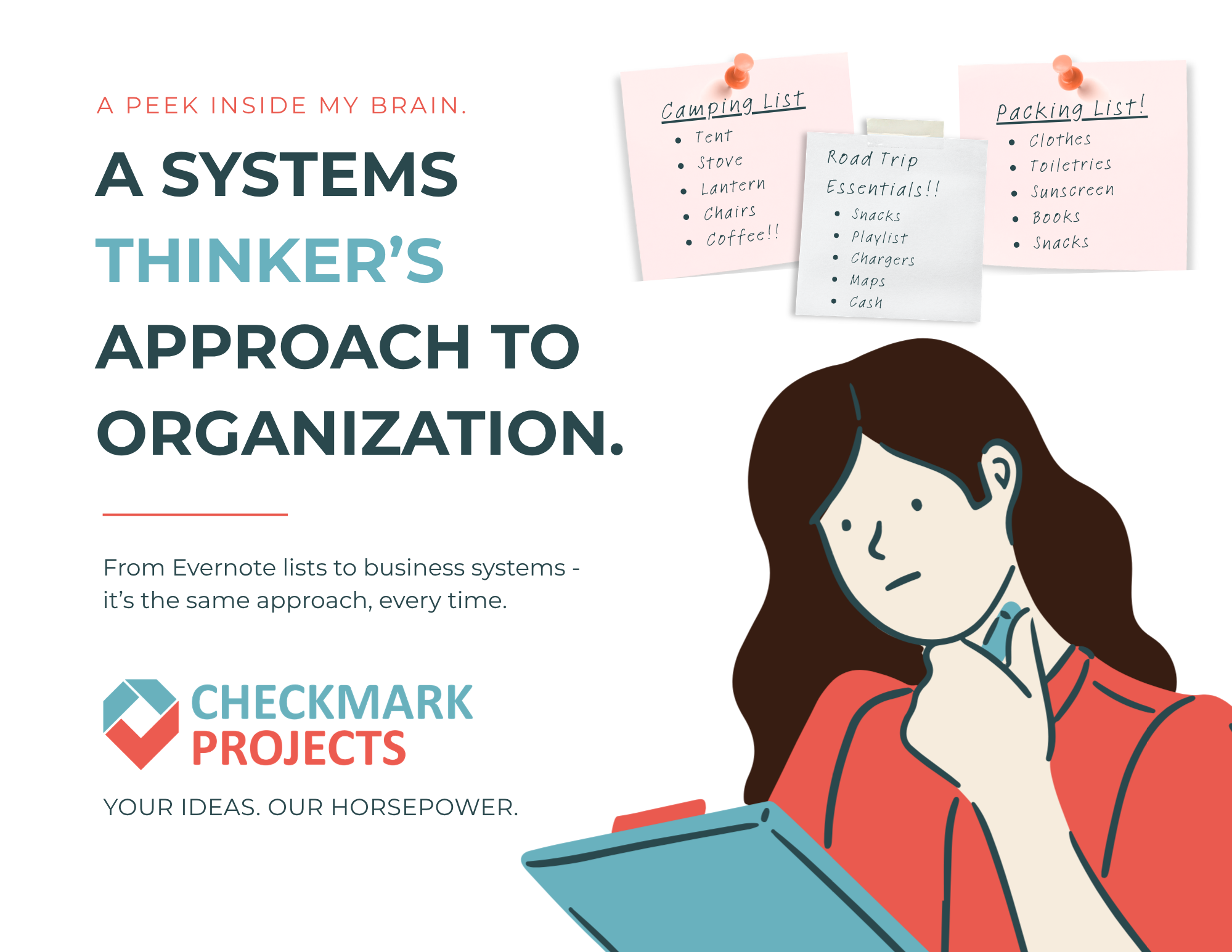
A Peek Inside My Brain
A few weeks ago, I decided it was finally time to clean up the collection of lists I'd accumulated in Evernote over the years.
Camping lists.
Road trip lists.
Holiday shopping lists.
Vacation packing lists.
"Don't forget this next time," lists.
At first glance, this probably sounds like a personal organization project.
In reality, it perfectly demonstrates how my brain approaches operations, systems, CRMs, and project management.
Because the problem I was trying to solve in Evernote is the exact same problem I solve for businesses every day.
The Problem: Too Many Versions of the Same Thing
Over time, my Evernote became filled with dozens of nearly identical notes.
A camping list from Yellowstone.
A coastal road trip list.
A weekend getaway list.
Each one was slightly different. Each one contained valuable information. And every time we planned a new trip, I found myself asking:
"Which version should I use?"
"Did I remember to add the camp stove to this one?"
"Where did I write down that packing tip from last year?"
Sound familiar?
Businesses experience this constantly.
Multiple onboarding processes that all accomplish the same thing.
Different team members using different versions of templates.
CRM workflows that evolved over time without a clear structure.
Duplicate forms, duplicate tasks, and duplicate data.
Teams recreating work because nobody trusts the existing process.
When systems become inconsistent, people stop trusting them. When people stop trusting systems, they stop using them. And that's where inefficiency begins.
My Solution: Build Master Templates
Instead of maintaining dozens of nearly identical lists, I'm creating a small library of master templates.
Examples include:
Master Camping List
Master Road Trip List
Master Vacation Packing List
Master Holiday Planning List
Each master template contains everything that might be needed.
When a new trip comes along, I simply duplicate the appropriate template, remove what doesn't apply, add trip-specific details, and move forward.
The result?
Less time rebuilding.
Less mental energy spent remembering.
Far less chance of forgetting something important.
This Is Exactly How I Design Business Systems
The same philosophy applies when I'm building operational systems for clients. Whether we're working in a CRM, project management platform, or case management system, the goal is rarely to create something entirely unique. Instead, we identify the repeatable components and build a strong foundation.
For example:
In a CRM: Rather than creating a brand-new process for every prospect or client, we build standardized pipelines, automated workflows, email templates, and task sequences that can be repeated consistently.
In Project Management: Instead of starting every project from scratch, we create reusable project templates, task lists, milestones, and SOPs that can be duplicated and customized.
In Client Service: Rather than relying on memory, we document onboarding steps, communication protocols, deliverables, and responsibilities so everyone knows exactly what happens next.
It's the same concept as my camping lists.
Build once.
Refine continuously.
Reuse often.
Good Systems Create Confidence
One of the biggest benefits of strong systems isn't efficiency. It's confidence.
When we're packing for a trip, I don't want to spend mental energy wondering whether we remembered headlamps, propane, or coffee filters.
I want to trust the system. Businesses need that same confidence.
Team members should never have to wonder:
What happens next?
Who owns this task?
Which email should I send?
Are we waiting on the client?
Did anyone follow up?
A well-designed system answers those questions automatically.
My Favorite Question Is: "How Many Times Will You Need to Do This?"
If the answer is more than once, there's usually an opportunity to create a repeatable process. That's true whether you're planning a camping trip or managing hundreds of client relationships.
Because the most effective businesses aren't built on heroic memory. They're built on reliable systems. And sometimes, those systems start with a simple packing list in Evernote.
At Checkmark Projects, we help professional service firms design operational systems that reduce friction, improve consistency, and allow teams to focus on serving clients instead of reinventing processes.