The Operational Audit: What to Tweak, Not Overhaul
The Overload Illusion: Why Adding More Isn't the Answer
It’s common to feel the urge to reinvent everything when reviewing how your business operates. When we look closely at our processes, systems, and tools, the temptation of a complete overhaul can be strong. But what if we resisted that impulse? What if, instead of tearing everything down and starting from scratch, we focused on strategic, high-impact tweaks that deliver meaningful improvements quickly?
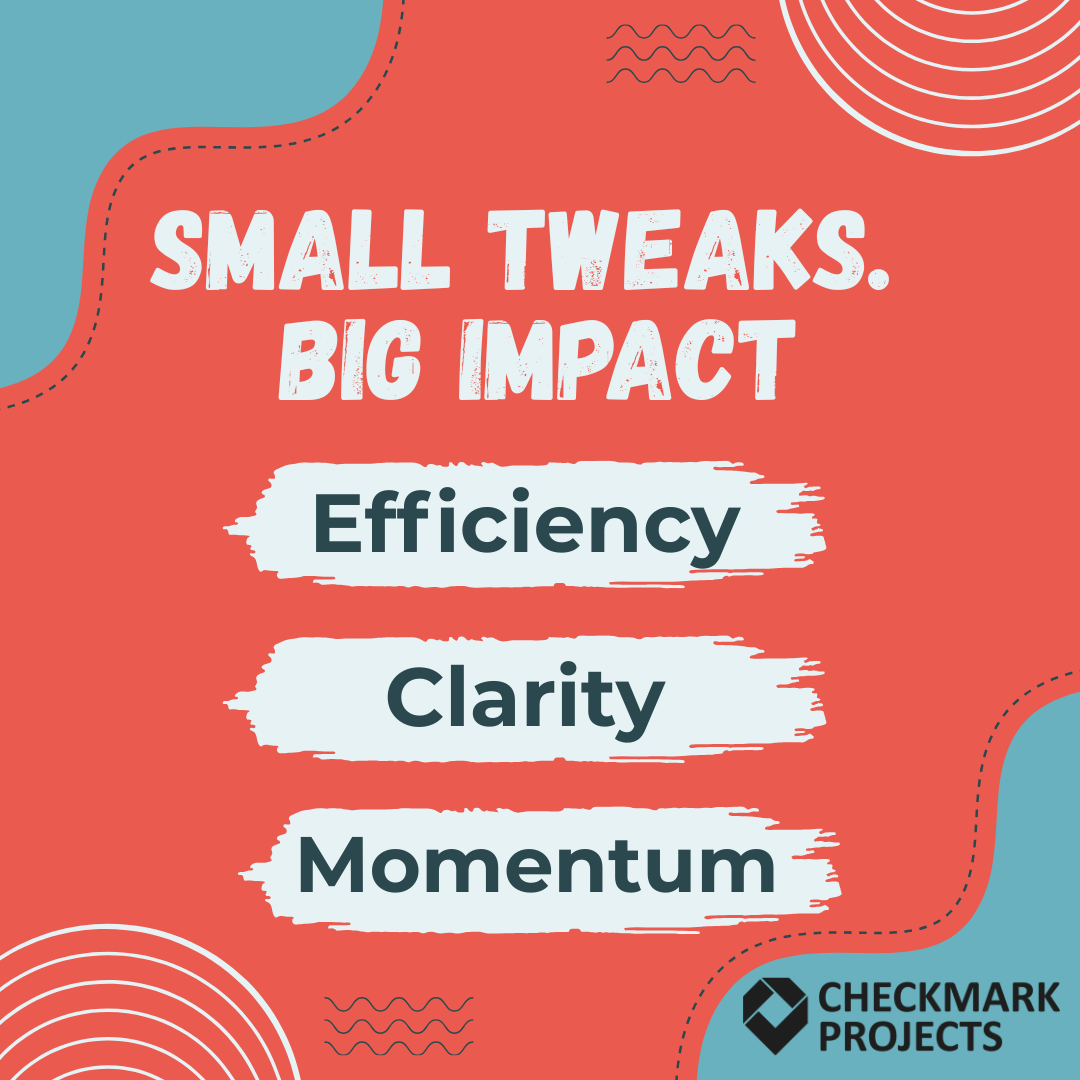
The “big bang” overhaul can be paralyzing. It drains resources, consumes valuable time, and often leaves teams feeling more overwhelmed than optimized. Instead of chasing large-scale transformation, there’s real power in the quick win. By conducting an operational audit with a scalpel rather than a wrecking ball, leaders can identify the small, often overlooked adjustments that significantly improve efficiency, clarity, and team morale.
How to Approach Your Operational Audit With A Tweak, Not An Overhaul
1. Identify the "Paper Cuts" of Productivity
Think about the minor annoyances that plague your team daily. These aren't catastrophic failures, but rather the constant little "paper cuts" that slow things down and cause frustration.
Meeting Cadence: Are your stand-ups dragging? Do weekly syncs feel redundant?
Internal Communication Tools: Is information getting lost in a labyrinth of Slack channels, emails, and project management comments?
Documentation Standards: Is finding key information a treasure hunt because documentation is inconsistent or non-existent?
These are prime targets for a quick tweak.
2. Prioritize for Quick Wins
You've identified the pain points. Now, which ones can you fix fastest for the biggest immediate impact? The goal is to see a noticeable improvement by the end of the month.
Example: Meeting Cadence Tweak: If stand-ups are too long, implement a strict 15-minute timer and a "parking lot" for deeper discussions. You could even introduce a "no updates needed" policy for days when individuals genuinely have nothing new to report, allowing them to opt out.
Example: Communication Tool Tweak: Designate clear purposes for each communication channel. E.g., "Slack for quick questions/updates, Email for formal communication, Project Management Tool for task-specific discussions." Reinforce this with a simple, shared guideline.
Example: Documentation Tweak: Instead of rewriting everything, pick one critical, frequently accessed document type (e.g., client onboarding checklist, bug reporting procedure) and create a clear, simple template. Challenge your team to use it for all new instances this month.
3. Implement, Communicate, and Get Feedback
Small changes can still cause ripples if not handled well.
Communicate Clearly: Explain why you're making the tweak and what the expected benefit is.
Empower the Team: Involve them in the solution. They're on the front lines and often have the best ideas for practical adjustments.
Set a Review Date: At the end of January, check in. Is the tweak working? Does it need further refinement? The beauty of a tweak is its flexibility.
4. Celebrate the Small Victories
The truth is, adding something new always feels exciting. It feels like progress. Subtraction is harder because it requires admitting that something you spent time on in the past is no longer relevant.
Don't underestimate the power of acknowledging even minor improvements. A quick win isn't just about the operational benefit; it's about building momentum, boosting morale, and demonstrating that positive change is achievable without monumental effort.
Instead of being drawn to the allure of a complete overhaul, consider the value of strategic tweaks, targeted adjustments, and quick operational wins. Small refinements can often create outsized improvements in how a team works and communicates.
You might be surprised at how much more agile, efficient, and confident your team becomes when you focus on sharpening the tools and systems you already have rather than replacing them entirely
What small tweak are you going to implement in your operations?
Ready to Create Your Action Plan?
This week, take one hour to draft your "Operational Audit". Identify one meeting, one report, and one system to eliminate or delegate by the end of the month. Set up a discovery call